Kakuma Social Agri-ventures: Building Dignity Through Agriculture and Community Leadership
06 September 2026|Tito Mise
Dominic Amanya Suleiman, founder and Young Impact Associate Fellow, is a refugee leader whose journey reflects resilience, innovation, and a deep commitment to community transformation. Originally from South Sudan, Dominic is an alumnus of the Nairobi Climate Fellowship and the Social Entrepreneurship program offered by Jesuit Refugee Service (JRS Kenya) and Tangaza University. His professional experience spans education, advocacy, agriculture, and project management.
How did the idea behind Kakuma Social Agri-ventures come about?
Kakuma Social Agri‑ventures began in 2021 as a small classroom research project. What started as a simple academic exercise quickly grew into a fully operational, refugee‑led organization. This transformation was driven by the determination of young people in the Kakuma community and strengthened through collaboration and mentorship.
A key turning point was the support received from Jesuit Refugee Service (JRS). Believing in the students’ vision, JRS provided access to land, shared essential resources, and offered continuous guidance through its dedicated staff. This support enabled the initiative to move beyond the classroom and scale into a practical agricultural venture.
Fueled by passion and a desire to create opportunities for others, Dominic and a team of community youth took the project forward. With mentorship from JRS, the research idea evolved into a functioning agricultural organization that now benefits both refugees and members of the host community.
What is the objective of Kakuma Social Agri-ventures?
Kakuma Refugee Camp faces persistent challenges, arid climate conditions, water scarcity, and limited food diversity. Many families struggle to afford nutritious meals, with young people and students particularly affected by financial hardship.
Kakuma Social Agri-Ventures was established with a clear purpose:
to fight food insecurity, build livelihood opportunities, and empower refugees through climate‑smart agriculture.
The organization focuses on producing nutritious food while uplifting community members through skills training, employment, and income‑generating activities. Through its farm produce, the organization supports vulnerable students who, like many others in the camp, face financial challenges that affect their education and well-being.
The team practices environmentally friendly farming, using waste from schools and the community as organic fertilizer. Through agriculture, they aim not only to feed families but also to build sustainable pathways towards self‑reliance.
How did you come across JRS on your journey?
As the initiative grew, the team needed more space, guidance, and technical support. This led them to JRS Kakuma, where they found partners willing to believe in their vision.
JRS provided access to land for farming, shared essential farming resources, and offered technical mentorship from staff members who guided the young organization through its early stages.
Thanks to this partnership, Kakuma Social Agri-ventures expanded its activities, improved its farming technologies, and scaled up production, creating impact far beyond what the founders had initially imagined.
How do you think your project contributes to creating “communities of solidarity”?
According to Gahuza Miryango, a communication student at Southern New Hampshier University (SNHU) and a lead member of the organization, Kakuma Social Agri-ventures has become a space for empowerment, teamwork, and community transformation.
His communication skills, branding, networking, and internal communications have been essential in strengthening the organization and creating opportunities for others. Through his leadership, he mobilized students to launch an Environmental Club at Arrupe Learning Center. The club promotes waste management, monthly clean‑ups, and the use of organic waste as fertilizer at the farm.
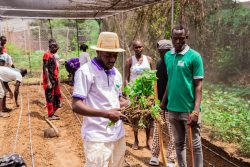
The organization has also made remarkable strides in building community solidarity:
- Fresh produce was supplied to the community
- 20 active team members, including volunteers and paid staff
- 65 farmers trained in climate-smart agriculture
- Livelihood opportunities created for youth and vulnerable households
- Waste management initiatives that turn school waste into organic fertilizers
These activities bring together people from different backgrounds, reduce social tension, and nurture a culture of cooperation and mutual support within Kakuma Refugee Camp.
Through agriculture, Kakuma Social Agri-ventures gives refugees the tools to support their families, improve living conditions, and build skills that allow them to dream of a better future.
What challenges do you face?
Despite its achievements, the organization faces several challenges:
- Water scarcity: Kakuma is an arid region where water is limited for both households and farming.
- Limited resources: The organization maximizes the few tools and inputs it has, but demand far exceeds supply.
- Lack of technical expertise: Skilled agronomists are scarce in the camp, limiting advanced training and technical growth.
- Climate constraints: Harsh weather conditions make agriculture difficult and unpredictable.
Yet, despite these obstacles, the team continues to innovate, adapt, and stay committed to improving food security.
A message of gratitude and hope
Dominic expresses deep appreciation to the JRS Arrupe Learning Center leadership, Enos Abelle Kabelle, Joseph Oluoch, and Tabitha Muthoni Maina, for their continuous support, opportunities, and encouragement. Their guidance has played a transformative role in shaping Kakuma Social Agri-ventures into what it is today.
Kakuma Social Agri-ventures is a movement for dignity, opportunity, and youth empowerment.
It equips young people with the knowledge, confidence, and tools to build their own futures and contribute meaningfully to their communities.
Explore more