From Skills to Self-Reliance: Nathalie’s Journey from Training to Entrepreneurship
15 September 2026|Sandra Nalubuulwa
For Nathalie Mwavitha, a 36-year-old refugee from the Democratic Republic of Congo, vocational training became a stepping stone towards a more secure and independent future.
Between June and December 2024, Nathalie completed a six-month professional Catering course with the Jesuit Refugee Service (JRS) Uganda. Her dedication and growing culinary skills opened the door to an industrial internship at Mestil Hotel, where she trained from January to March 2025.
During her internship, Nathalie demonstrated exceptional culinary skills, commitment and a strong work ethic. Her efforts did not go unnoticed. At the end of her internship, the hotel retained her as casual and relief staff, giving her an opportunity to continue developing her skills while earning an income.
Turning Skills into Opportunity
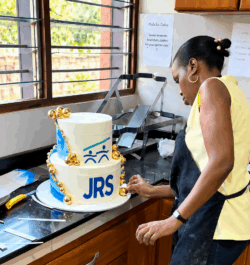
Nathalie’s journey did not stop at employment. Building on her specialization in baking, she took another step towards self-reliance by starting her own business, Malaika Cakes.
Today, Malaika Cakes produces custom-designed cakes and confectionery for weddings, graduations, birthdays and other celebrations in the local market.
Beyond creating an income for herself, Nathalie is also creating opportunities for others. When she receives large orders or experiences periods of increased demand, she engages fellow JRS catering alumni to support her business.
In this way, Malaika Cakes has become more than a personal enterprise. It is helping create employment opportunities and demonstrating how skills development can contribute to wider community empowerment.
Today, the business generates an average annual gross profit of approximately UGX 3 million, providing Nathalie with a viable pathway towards sustainable self-reliance and economic integration.
A Journey of Possibility
Nathalie’s story demonstrates what can happen when skills, opportunity and determination come together. From vocational training to industrial experience, employment and entrepreneurship, her journey reflects the potential of refugees to build sustainable livelihoods, contribute to their communities and shape their own futures.
Through vocational skills development and livelihood opportunities, JRS Uganda continues to support forcibly displaced people on their journey towards dignity, self-reliance and meaningful participation in their communities.
Explore more