A Lifeline of Nutrition: Ahmed’s Journey from Malnutrition to Recovery as told by Samuel Swaka, physiotherapist, JRS Maban
26 October 2026|Matt Ippel
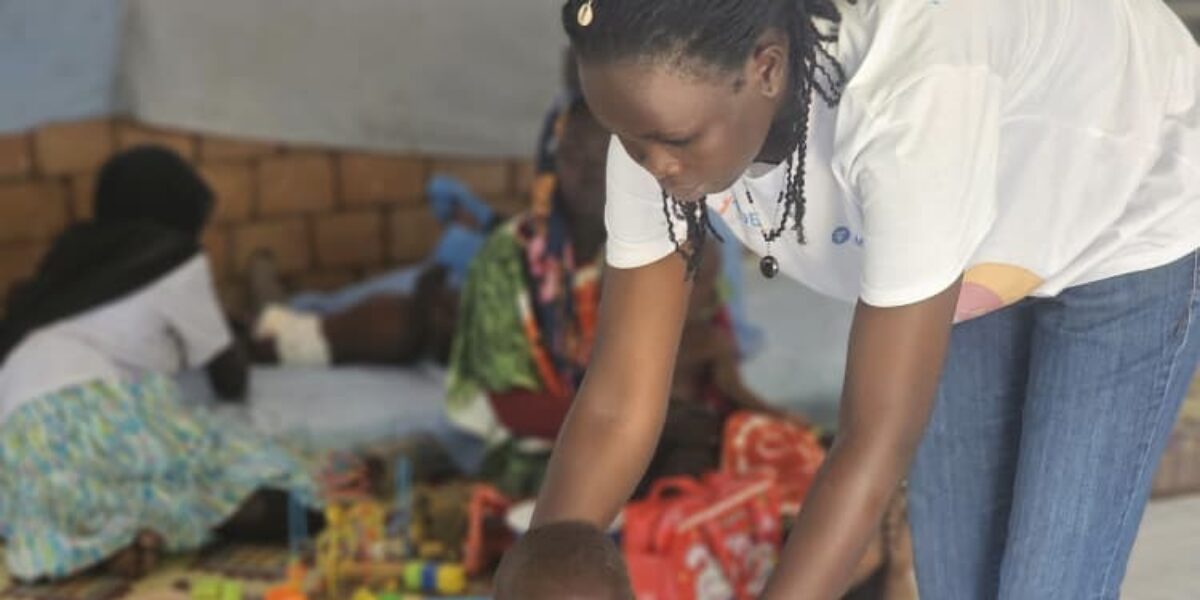
When Ahmed came to me at the end of 2024, he was two years old and could not move on his own.
He had been referred to us for physiotherapy. He came with his mother, who is raising her children on her own. I assessed him and recorded developmental delay and general body weakness. What I was looking at was not an injury. It was what hunger does to a small body over time. A partner humanitarian organization had diagnosed him with moderate acute malnutrition at one year old and enrolled him for monthly nutritional supplements. By the time Ahmed reached us the effects were visible in everything he tried to do.
We began physiotherapy sessions and I was hopeful. I expected his health to improve and that he would reach his developmental milestones gradually, on his own.
Then, in January 2025, the supplements stopped coming. Funding reductions were moving through the humanitarian system, and the programs that had been supplying monthly nutritional support across the four refugee camps in Maban were scaled back and their eligibility narrowed. Ahmed’s family was losing hope.
I want to be clear about what that means inside a physiotherapy and rehabilitation space. A child who is not eating cannot build strength. I can position a child, I can stretch him. And I can support his caregivers to learn to do these exercises regularly at home. But none of it works if there is nothing in his body to build on.
So, JRS drew on its donors and friends and began supplying nutritional supplementation for the children we identified and assessed with nutrition needs. Ahmed was one of them.
In the first month I did not see much change. After three months, he had gained enough strength to move objects and to move his own body, though not yet unaided. He was getting around the day care center. He had begun to take a real interest in playing with the other children, and he had even started to speak a little.
When he arrived, he could not move. He eventually began to crawl. And now he can stand and move without assistance. Ahmed is 4 years old now and still comes to the center for monitoring and for strength exercises that he continues at home. HIs younger sister presents similar challenges and is enrolled with us too.
Access to physiotherapy is not enough on its own. A child needs strength in their body to do the work, and they need to be alert enough to follow what I am asking of them. Malnutrition takes away both. That is why Ahmed beginning to speak mattered to me as much as Ahmed beginning to stand. The nutrients are what let the body respond. Once Ahmed had them, his did.
Explore more