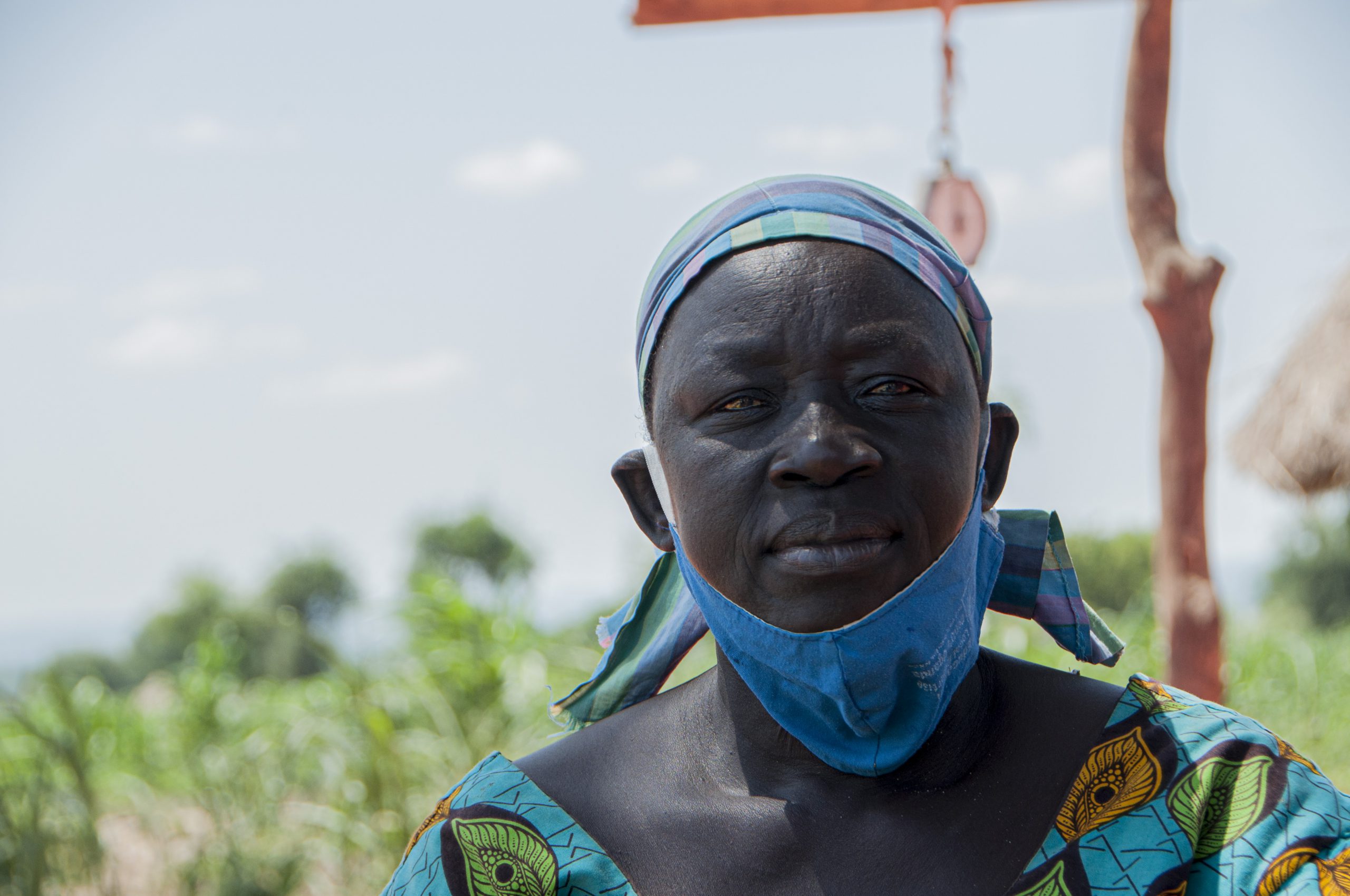
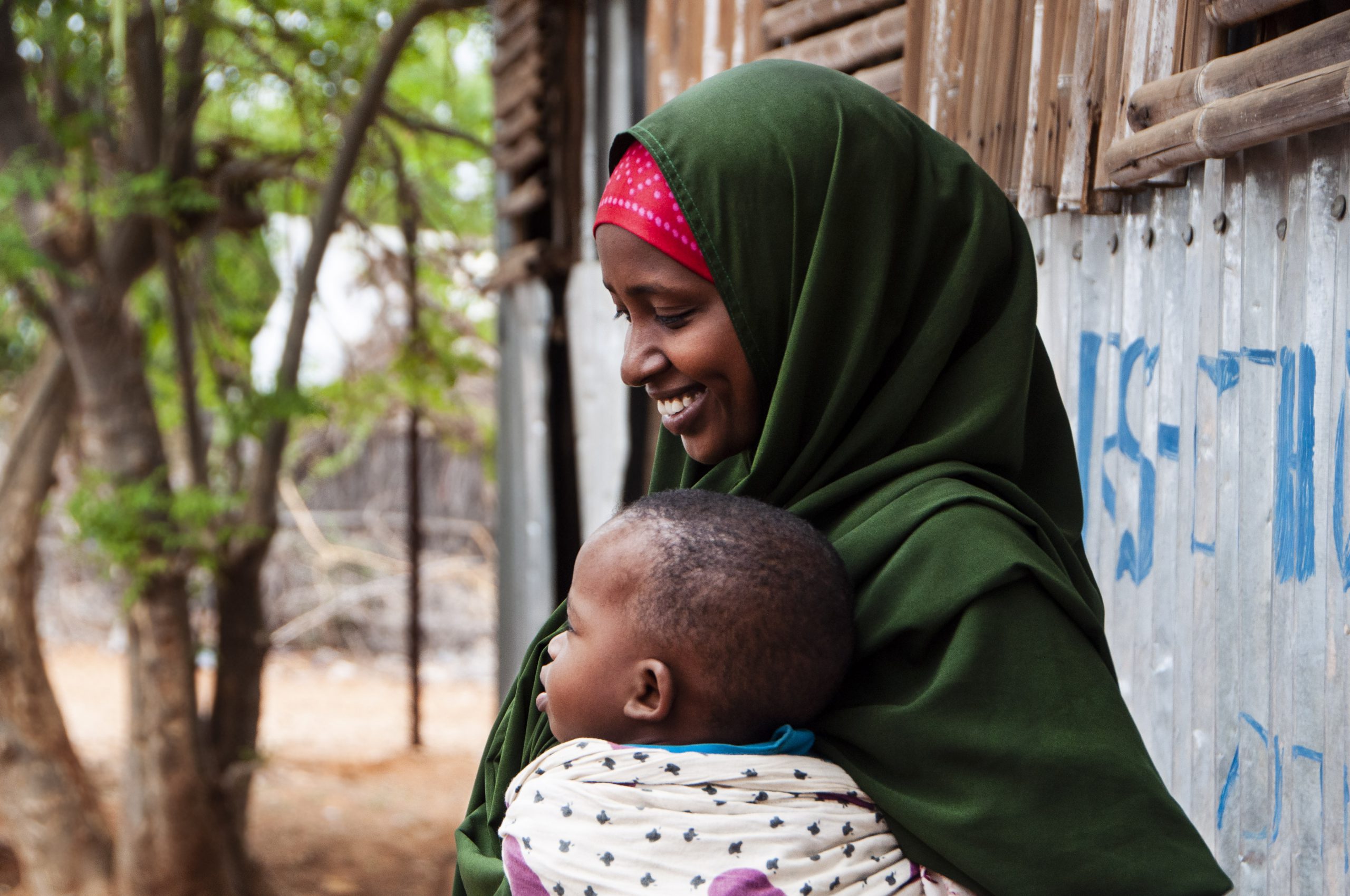
Amid rising tensions, JRS South Africa stands with refugees and migrants
20 July 2026|Ami-Adolphe Mudekereza
As fear and uncertainty affect vulnerable communities across parts of South Africa, Jesuit Refugee Service (JRS) continues accompanying refugees and migrants through humanitarian assistance, advocacy, and a commitment to protecting the dignity of every person.
Fear has become part of everyday life for many refugees and migrants living in parts of South Africa. Some hesitate to leave their homes for work, others avoid attending language or livelihood classes, while many remain uncertain about what tomorrow will bring. Yet amid this uncertainty, acts of solidarity continue to emerge as humanitarian organizations, faith communities, and local partners accompany those most affected with practical support and hope.
In recent weeks, heightened anti-migrant tensions in parts of the country have created an atmosphere of fear and anxiety, particularly among vulnerable communities living in urban areas. Reports of individuals being pressured to leave their homes and businesses, informal raids targeting foreign nationals, and growing uncertainty surrounding legal documentation have left many people afraid to move freely, access services, or continue earning a living.
The scale of the impact has been significant. Recent estimates indicate that more than 300,000 foreign nationals have been affected by the ongoing tensions, with thousands displaced, more than 900 arrests reported, and several deaths recorded.
While the situation has gradually become calmer following increased government intervention, its effects continue to be felt by thousands of refugees, asylum seekers and migrants whose lives have been disrupted by uncertainty and fear.
For many, the greatest loss has not only been economic opportunity, but also the confidence to carry on with everyday life.
“People are scared to go to work. Many are afraid to be seen outside,” explains Matseliso Ntsoelikane, Country Director of Jesuit Refugee Service (JRS) South Africa. “Some remain inside their homes, while those who go out stay constantly alert, warning one another whenever they hear of possible threats. This fear has also affected participation in our livelihoods and English language programmes, as many no longer feel safe enough to attend.”
For JRS South Africa, these developments reinforce the importance of accompaniment—remaining close to people during moments of uncertainty, listening to their experiences, and responding to their immediate needs while preserving their dignity.
JRS South Africa has been accompanying refugees, asylum seekers, and other forcibly displaced people for more than 25 years, providing protection, basic needs assistance, education, livelihoods, psychosocial support, and advocacy.
Through its programmes and partnerships, JRS works to ensure that displaced communities have access to opportunities, services, and spaces where their dignity and rights are recognized.
Accompanying people in moments of uncertainty
Since the escalation of tensions, JRS South Africa has worked alongside other humanitarian and faith-based organizations to provide practical assistance to displaced refugees and migrants.
To date, JRS South Africa has supported 1,167 people affected by the crisis, including 75 individuals directly impacted by the recent unrest.
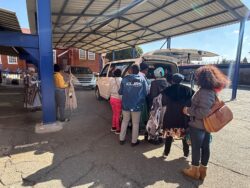
The organization has supported the distribution of food and hygiene items, assisted vulnerable individuals with transportation to their respective embassies, and collaborated with organizations responding to the humanitarian needs of people seeking temporary protection. JRS has also participated actively in a consortium of organizations working with refugees and migrants, contributing to coordinated humanitarian responses and supporting joint public statements advocating for the protection of vulnerable communities.
“We want to continue supporting people with their basic needs—food, hygiene items and, where possible, transport,” says Ntsoelikane. “These are practical ways of accompanying people during a very difficult period while ensuring they are treated with dignity.”
This response reflects the mission of JRS to accompany, serve and advocate for refugees and other forcibly displaced people, recognizing that humanitarian action begins with presence, compassion and solidarity.
JRS South Africa is grateful for the solidarity and support received from humanitarian partners, faith communities, civil society organizations, and individuals who have contributed to the response during this challenging period. However, the needs remain significant, and continued support is essential to ensure that affected refugees and migrants can access protection, assistance, and pathways towards recovery.
Protecting human dignity while respecting the rule of law
JRS South Africa recognizes that migration is a complex issue requiring balanced and lawful responses.
The organization acknowledges the responsibility of governments to manage migration through established legal frameworks while emphasizing that all people, regardless of their legal status, deserve to be treated with humanity and respect.
“No citizen has the right to forcibly remove people from where they live or work,” Ntsoelikane explains. “These matters should always follow legal processes and be handled by the authorities mandated to do so.”
She also notes the importance of strengthening administrative processes to ensure that individuals entitled to legal documentation receive it in a timely manner.
“At the same time, those who wish to come to South Africa should also follow the appropriate legal channels. Our message is one of balance, respect for the law, and respect for the dignity of every human person.”
This balanced approach reflects JRS’ commitment to promoting dialogue, protecting human rights, and encouraging solutions that uphold both justice and human dignity.
Beyond vulnerability: recognizing resilience
Although recent events have exposed the vulnerabilities many refugees and migrants face, they have also revealed remarkable resilience.
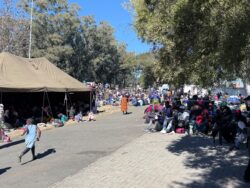
Even amid uncertainty, many refugee-owned businesses have reopened after temporary closures. Communities continue supporting one another by sharing information, encouraging neighbors to remain safe, and helping families access assistance when needed. Churches, humanitarian organizations and volunteers have likewise played an important role in providing spaces of welcome and practical support.
For JRS South Africa, these acts of resilience demonstrate that refugees and migrants are not merely recipients of assistance. They are individuals with aspirations, talents and determination who continue contributing to the communities in which they live despite significant challenges.
Every day, refugees participate in local economies, establish businesses, pursue education, care for their families and contribute to the social fabric of South African society. Their resilience is a reminder that behind every statistic is a person seeking safety, opportunity and the chance to rebuild a meaningful life.
Walking together in hope
At the heart of JRS South Africa’s response is a commitment to remain close to those most affected by displacement, fear, and uncertainty. While humanitarian assistance addresses immediate needs, accompaniment goes beyond the provision of food, hygiene supplies, or transport. It is about choosing to be present with people, listening attentively to their stories, sharing in their struggles, and affirming their worth at a time when many feel isolated, misunderstood, or forgotten.
For JRS, accompaniment is rooted in the belief that every person possesses inherent dignity and deserves to be treated with respect, compassion, and humanity. It means creating spaces where refugees and migrants feel seen, heard, and supported, while recognizing the resilience they demonstrate every day as they rebuild their lives, care for their families, and contribute to the communities in which they live.
“We believe that everybody should be treated as a human being,” Ntsoelikane reflects. “Whether someone is documented or undocumented, their fundamental human rights should always be protected.”
She emphasizes that JRS South Africa seeks to promote a balanced and constructive response to the current situation—one that respects the rule of law while safeguarding the dignity and rights of every person.
“Migration is a complex reality, but our shared humanity must remain at the center of how we respond. Respect for legal processes and respect for human dignity are not mutually exclusive; they must go hand in hand.”
This commitment has led JRS South Africa to work closely with churches, humanitarian organizations, civil society partners, and refugee-led networks to ensure that vulnerable people receive practical support while also fostering dialogue, understanding, and peaceful coexistence within communities. Through collaboration, JRS seeks not only to respond to immediate humanitarian needs but also to contribute to a society where differences are met with solidarity rather than fear.
As communities continue to recover from the impact of recent events, JRS South Africa remains committed to walking alongside those affected, while welcoming continued collaboration and support from all those who share a commitment to human dignity and peaceful coexistence.
In times of uncertainty, accompaniment becomes more than a humanitarian response—it becomes a witness to hope. It reminds communities that compassion has the power to overcome fear, that dialogue is stronger than division, and that every act of solidarity helps restore dignity to those who have been forced to flee.
By continuing to walk alongside refugees and migrants, JRS South Africa reaffirms its mission of accompanying, serving, and advocating for forcibly displaced people. Guided by the conviction that every person is created in the image of God, JRS remains committed to building communities where people are recognized not first by their nationality, legal status, or circumstance, but by their shared humanity and their equal dignity.
Explore more