Girls’ education in crisis contexts: JRS Burundi-Tanzania makes its mark at PANCOGED 2
10 September 2026|Rodrigue Murerwa
 From 02 to 04 July, JRS took part in the 2nd Pan-African Conference on Girls’ and Women’s Education (PANCOGED 2) in Bujumbura. Organized by the African Union through its International Centre for Girls’ and Women’s Education in Africa (AU/CIEFFA), its central theme was “Prioritizing girls’ and women’s education: developing their skills and accelerating learning and training opportunities”.
JRS Burundi-Tanzania shared its model of intervention in the face of humanitarian crises in front of an audience of high-level personalities and strategic partners such as FAWE, ACERWC, OAFLAD, World Vision and Libraries Without Borders, JRS made a strong plea for access to safe and quality schooling.
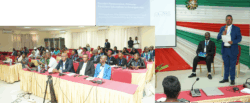 It was during the parallel panel focused on the sub-theme “Girls’ and Women’s Education in Emergencies, Humanitarian Contexts and Climate Change” that Fr. Jean Paul Mukunzi, Education Specialist, presented the strategy and achievements of JRS Burundi-Tanzania. With a total budget of €4,705,000 mobilized with its partners, JRS demonstrates that a structured response can effectively break down the barriers of exclusion in the most unstable environments. It was from this side event that the conference drew the first call to action to prioritize Legislative & Policy Reforms for Inclusive Re- entry & Second-Chance Education. Calling on governments and development partners to domesticate, reform, and strictly enforce legal frameworks that guarantee school re-entry and continued learning pathways for all adolescent mothers, pregnant girls, and out-of-school youth, including those living in rural areas, those on the move/displaced in humanitarian and emergency contexts, and those living with disabilities.
Impact results on the ground
This approach is expressed through major indicators carried out by flagship projects (KAZE TWIYUNGE, Komeza Wige, TeamUp, ALBOAN, GFFO):
- Mobilization and Infrastructure: 472 partner schools engaged, 1,164 teachers mobilized for remedial classes and 68 school infrastructures (classrooms and latrines) rehabilitated.
- Community empowerment: Structuring of 14 Savings and Loan Groups (GECs) and 10 Savings and Production Cooperatives (PECs).
- Regional Anchoring: Targeted coverage in Burundi’s refugee camps (Bwagiriza, Kavumu, Kinama, Musasa, Nyankanda, Musenyi), urban areas (Bujumbura, Rumonge), Cibitoke and Makamba provinces, as well as the Nyarugusu camp in Tanzania.
“Education is not a luxury, but a lifeline. It is a strategic investment in human capital, sustainable peace, and community resilience. Father Jean Paul Mukunzi told the decision-makers.
Proof through resilience: Naomie’s journey
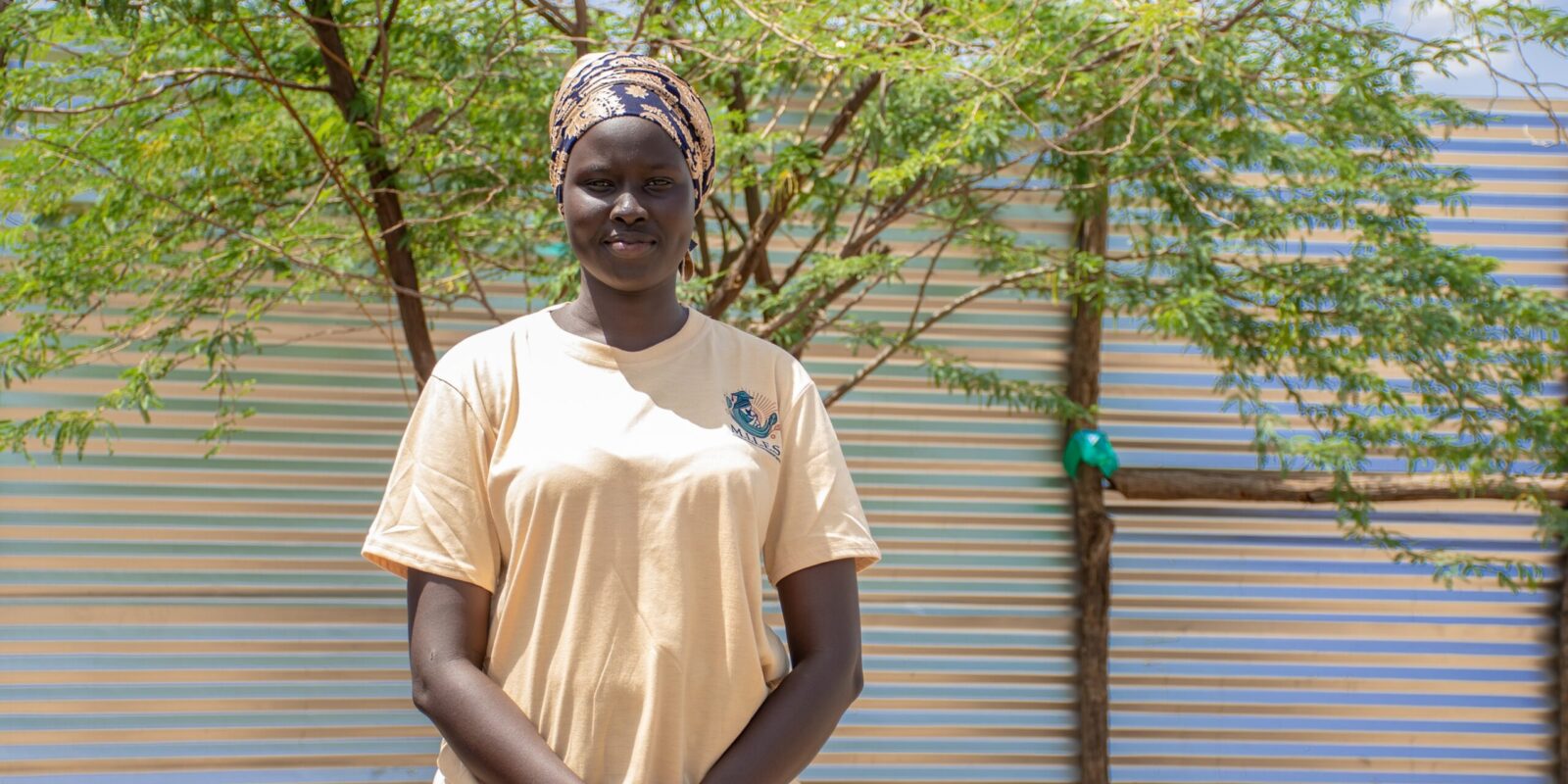
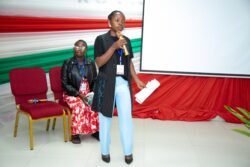 The highlight of the event was the testimony of Naomie Akonkwa Lumba. A former resident of the Nyankanda camp, she was able to enter higher education thanks to a scholarship from the DAFI program and has just graduated from the University of Burundi with distinction.
In front of the assembly, she made a vibrant appeal: “Never give up on your dreams of studying, even in a camp, even without means. Being a refugee girl is not easy, but refusing to give up changes your life. »
The National Challenge: The Statistical Analysis of the 1st Vice-President
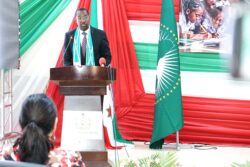 More generally, the general situation of education at the national level was detailed by the Minister of National Education and Scientific Research, François HAVYARIMANA. While parity is achieved at the preschool level (50.45 per cent girls) and basic education (50.48 per cent girls), the completion rate drops to 33.8 per cent at the lower secondary level.
The gap widens drastically at the university level, where the enrolment rate for girls is only 25% at the baccalaureate level. According to the 2024 statistical yearbook, women represent only 44.6% of higher education students, with a parity index of 0.80 (i.e. 80 female students per 100 students), marked by strong disparities according to the fields.
Closing: The First Lady’s commitment
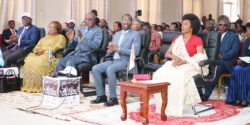 The conference concluded under the high patronage of the First Lady, H.E. Mrs. Angeline Ndayishimiye, who was honoured with a trophy from the African Union for the actions of the Umugiraneza Foundation. “Educating a girl is investing in an entire nation,” she said, reaffirming her willingness to work in synergy so that no girl is left behind.
Echoing this call, JRS urges all partners to join forces to translate this commitment into concrete actions on the ground.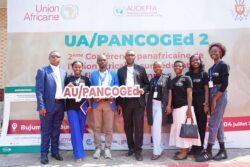
Explore more